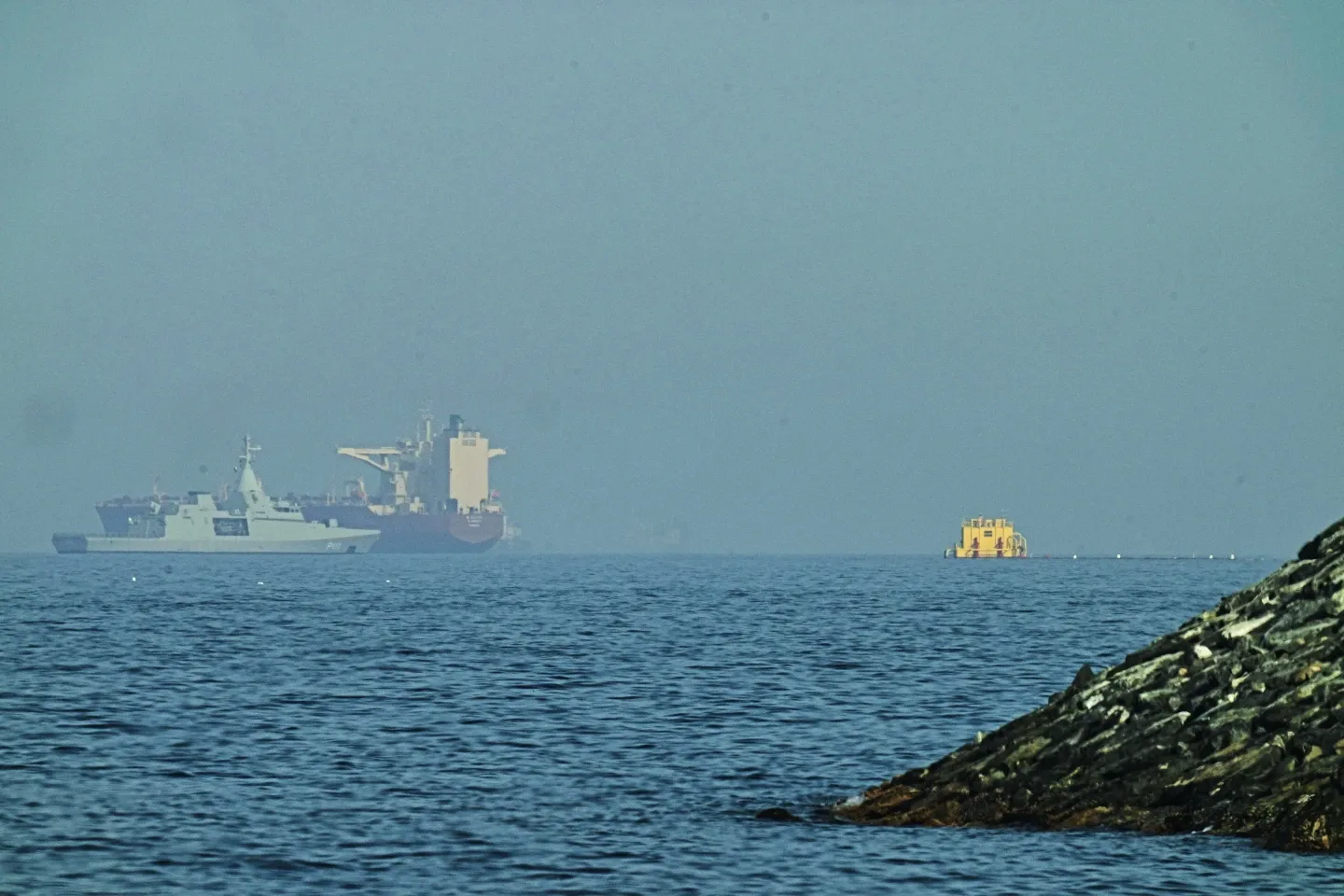
The United States is warning shipping companies that they could face sanctions for making payments to Iran to safely pass through the Strait of Hormuz.
The alert posted Friday by the U.S. Office of Foreign Assets Control adds another layer of pressure in the standoff between the U.S. and Iran over control of the Strait of Hormuz.
About a fifth of the world’s trade in oil and natural gas typically passes through the strait at the mouth of the Persian Gulf in peacetime.
Iran effectively closed the strait to normal traffic by attacking and threatening to attack ships after the U.S. and Israel launched a war on Feb. 28. It later began offering some ships safe passage by detouring them through alternate routes closer to its shoreline, charging fees at times for the service.
That “tollbooth” effort is the focus of the U.S. sanctions warning.
The payment demands could include transfers not only in cash but also “digital assets, offsets, informal swaps, or other in-kind payments,” including charitable donations and payments at Iranian embassies, OFAC said.
“OFAC is issuing this alert to warn U.S. and non-U.S. persons about the sanctions risks of making these payments to, or soliciting guarantees from, the Iranian regime for safe passage. These risks exist regardless of payment method,” it said.
The U.S. responded to Iran’s closure of the strait with a naval blockade of its own on April 13, preventing any Iranian tankers from leaving and depriving Iran of oil revenue it needs to shore up its ailing economy.
The U.S. Central Command said 45 commercial ships have been told to turn around since the blockade began.
Trump rejects Iranian proposal
The warning came as U.S. President Donald Trump swiftly rejected Iran’s latest proposal to end the war between the countries.
“They want to make a deal, I’m not satisfied with it, so we’ll see what happens,” Trump said Friday at the White House. He didn’t elaborate on what he saw as its shortcomings but expressed frustration with the Iranian leadership.
“It’s a very disjointed leadership,” Trump said. “They all want to make a deal, but they’re all messed up.”
Iran’s state-run IRNA news agency reported Iran handed over its plan to mediators in Pakistan on Thursday night.
The shaky three-week ceasefire between the U.S. and Iran appears to be holding, though both countries have traded accusations of violations. The standoff is increasingly putting pressure on the global economy, driving up prices and leading to shortages of fuel and other products tied to the oil industry.
Negotiations continued by phone after Trump called off his envoys’ trip to Pakistan last week, the president said. Trump this week floated a new plan to reopen the critical passageway used by America’s Gulf allies to export their oil and gas.
Iranian Foreign Minister Abbas Araghchi has briefed many of his regional counterparts on the country’s initiatives to end the war, according to his social media. He also held talks Friday with European Union foreign policy chief Kaja Kallas, who is in contact with the EU’s Gulf partners.
Iran hangs two men convicted of spying for Israel
Iran on Saturday said it hanged two men convicted of spying for Israel.
The Iranian judiciary’s news outlet, Mizanonline, identified the men as Yaghoub Karimpour and Nasser Bekrzadeh. It said they were hanged after the country’s Supreme Court upheld earlier death sentences.
The news outlet said Karimpour was accused of sending “sensitive information” to an officer in Israel’s Mossad intelligence agency, while Bekrzadeh was alleged to have sent details about government and religious leaders as well as information about Natanz. The central Iranian city is home to a nuclear enrichment facility bombed by Israel and the U.S. last year.
Iran has hanged more than a dozen people over alleged espionage and terrorist activities in recent weeks.
China’s U.N. envoy urges Iran to lift restrictions
Fu Cong, the Chinese ambassador to the United Nations, said Friday that maintaining the ceasefire is “the most urgent issue,” as well as bringing together the sides to resume good faith negotiations “to make sure that the ground is laid for reopening of Hormuz.”
Foreign Minister Wang Yi “has been on the phone almost constantly” with representatives from all sides, Fu said, adding that China supports Pakistan’s efforts to mediate between the parties.
Fu stressed the root cause of the tremendous suffering in Iran and neighboring countries and the growing turmoil in the global economy, especially in developing countries, “is the illegitimate war by the U.S. and Israel.”