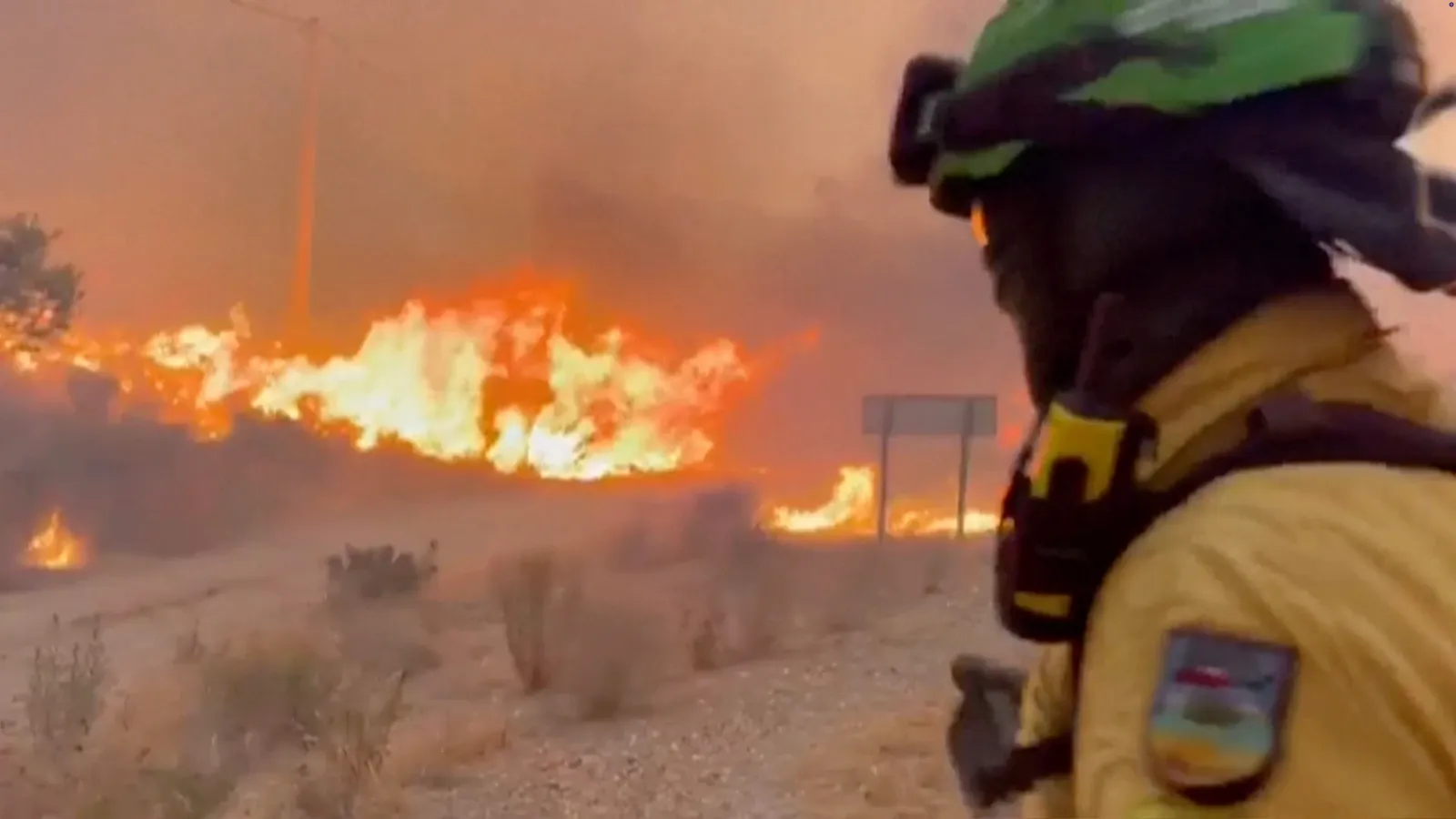
A wildfire in southern Spain has resulted in the deaths of at least 11 people, marking it as one of the country's deadliest on record, according to authorities on Friday, amidst soaring temperatures across much of the nation.
Several victims of the fire in Almeria were discovered inside burnt-out vehicles. Additionally, eight individuals sustained injuries during the blaze, which was being fought by 150 firefighters and 220 soldiers from Spain’s military emergency unit.
Regional emergency authorities reported that four British nationals appeared among the deceased. Juan Manuel Moreno, Andalusia’s regional leader, stated that 19 people were unaccounted for, citing information from the Cadena Ser radio station.
Authorities had previously reported a death toll of 12 but revised this figure to Friday morning.
Fire leads to evacuations and road closures
The fire originated in a hamlet situated in a semi-arid area near the Sierra de Los Filabres mountains. While the cause remains unconfirmed by authorities, individuals who reported the incident stated that a fallen power line ignited a blaze that quickly spread into a nearby forest.
Emergency services confirmed that the fire necessitated road closures and the evacuation of 1,000 residents.
Spanish Prime Minister Pedro Sánchez offered his condolences via X, stating there was "Immense sadness and desolation in the face of the terrible consequences of the fire affecting the province of Almeria."
Spain contends with intense heat again
In recent years, Spain has experienced frequent and severe heat waves, with temperatures frequently surpassing 40 C (104 F). The combination of wind, high temperatures, and low rainfall contributes to small wildfires escalating into uncontrollable blazes.
During June, Spain saw several days of record-setting heat, leading to over 1,000 excess deaths attributed to the heat.
Parts of Western Europe are currently experiencing their third heat wave in six weeks.
The European Union’s Copernicus Climate Change Service reports that Europe is the world's fastest-warming continent, with temperatures increasing at twice the rate of the global average since the 1980s. Globally, 2025 was recorded as the third-hottest year, bringing several intense heat waves across Europe.
Scientists caution that climate change, partially driven by the combustion of fuels such as gasoline, oil, and coal, is intensifying the frequency and severity of heat and dryness, thereby increasing the vulnerability of certain regions to wildfires.