Long lines at gas pumps made refueling an ordeal, while flights to vacation spots were canceled, delayed, or rerouted. E-commerce hubs experienced disruptions as buzzing drones set them ablaze through online orders.
It has been a difficult summer for Russians, characterized by near-daily turmoil, frustration, and anxiety.
The war initiated by President Vladimir Putin against Ukraine 4½ years ago has become an inescapable reality domestically. Nightly drone swarms have targeted Russian airports, struck oil refineries, or ignited warehouses belonging to major retailers Wildberries and Ozon.
Defense Ministry data compiled by The Associated Press indicates that over 43,300 Ukrainian drones were intercepted over Russia and illegally annexed Crimea during June, July, and August; however, some reportedly reached their targets. The ministry noted that approximately 7,700 were intercepted in the same period last summer.
Retiree Margarita Terekhova described the situation, saying, “We were living a normal life, and then suddenly it’s like this,” referring to waiting in line for fuel in Moscow amid the nationwide fuel crisis caused by refinery attacks that continued into August.
As autumn approaches, heightened awareness of the war and its repercussions arrives at a challenging moment for the Kremlin. A parliamentary election is scheduled for September 18-20, the first since the full-scale invasion.
While analysts suggest little doubt about the outcome of the tightly controlled balloting, which features few opposition candidates for the State Duma, they believe it still holds potential for political volatility.
Nikolay Petrov, senior research fellow at the NEST Centre founded by exiled tycoon and opposition figure Mikhail Khodorkovsky, stated, “Elections are a time when people should reflect on themselves, the country, where it’s going and what to do about it.”
Petrov added that even within a strictly controlled environment, "things that are unexpected, inconvenient (and) painful for the authorities" can occur.
Russia's Sentiment Shifts
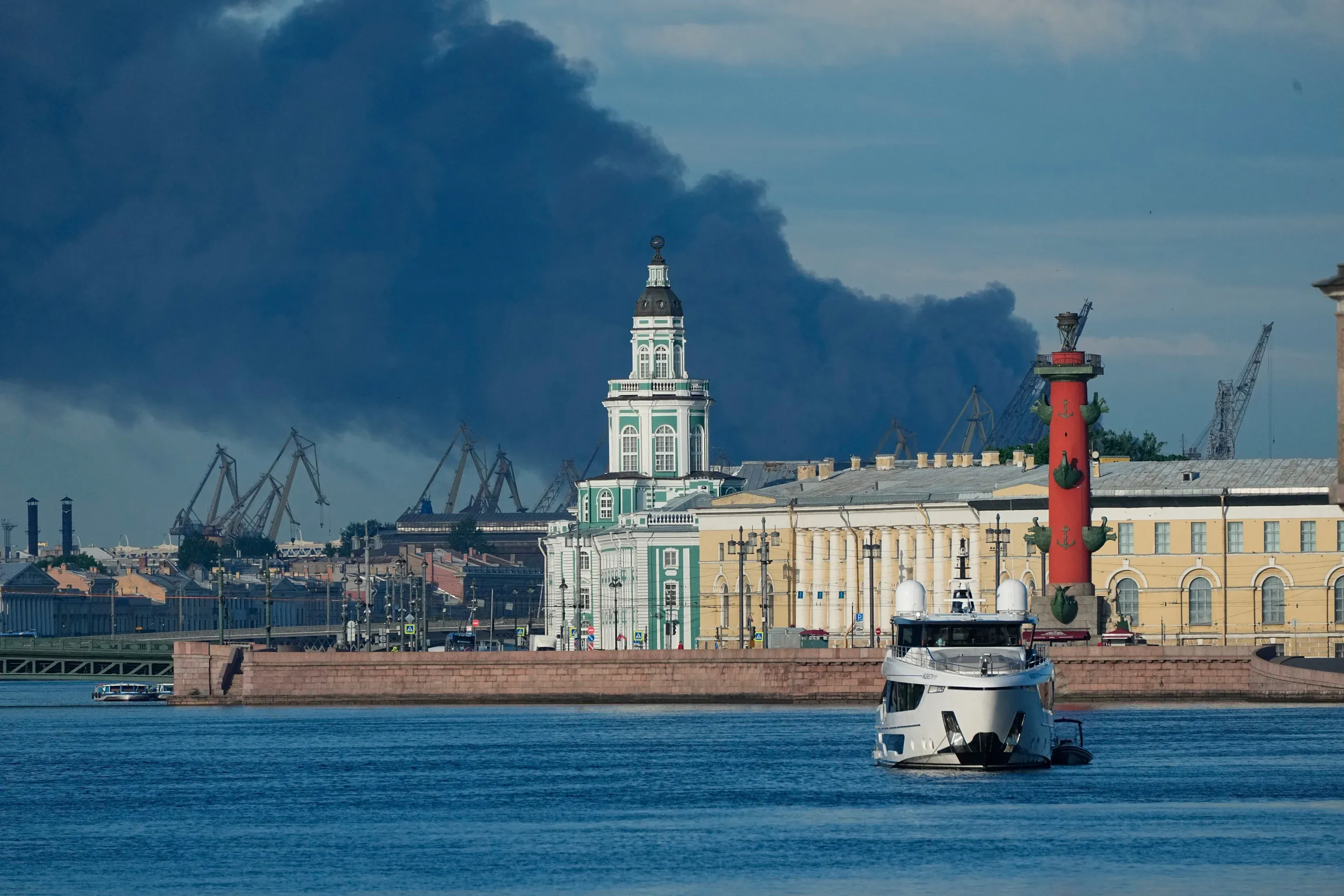
The summer's first major attack occurred on June 3 when an oil terminal outside St. Petersburg was struck as Putin’s economic forum there began. Since then, Ukraine has targeted refineries and warehouses belonging to Wildberries and Ozon across Russia—from Moscow to Yekaterinburg in the Ural Mountains, and Omsk in Siberia.
Denis Volkov, director of the country’s top independent pollster, the Levada Center, stated that this intensified campaign, with its expanded geography and increasing number of drones, shocked Russians.
Ukraine has not disclosed the number of drones it launches, but President Volodymyr Zelenskyy has spoken about expanding strikes, which he terms “long-range sanctions.” Kyiv officials maintain they will continue efforts to pressure Russia into ending the war, even as Moscow increases its bombardment of Ukraine.
Volkov told AP that these attacks have been the most prominent topic for two months this summer.
Social media documented gas station queues and travelers stranded by canceled flights. Entrepreneurs shared tearful accounts of inventory destruction at the targeted warehouses with their followers.
Images of massive fires at oil refineries and warehouses appeared online despite restrictions on publishing content detailing the attacks.
Although the shock from this summer's events has since lessened, Volkov noted a longer-term downward trend tracked by sociologists since last year: a worsening assessment of Russia’s economic situation and decreasing approval ratings for top politicians.
Putin’s traditionally high approval rating has seen some decline this year. Levada Center data showed it at 76% in August, down from 87% in September 2025.
Chris Weafer, CEO of the Moscow-based consultancy Macro-Advisory Ltd., observed that there is greater war awareness and less complacency regarding it.
He noted with a striking level of pessimism, particularly within the business community, that “People are grumbling more, they’re talking more” about the prospects for the war's end.
Rumors of Potential Mobilization
Nervousness has also been fueled by persistent rumors concerning an impending troop mobilization, similar to the widely unpopular one in September 2022 which drafted 300,000 men.
Zelenskyy and other Ukrainian officials claim Putin plans another mobilization after the Duma election—claims the Kremlin dismisses as “hoaxes.”
This has prompted some Russians to leave the country. One 23-year-old Muscovite told AP she left last month with her husband, concerned he might be drafted into the army.
The young woman, who requested anonymity due to safety concerns, also mentioned the fear stemming from Ukrainian attacks. She believes many feel exhaustion from the war, which can now impact “the life of any person in any corner of the country.”
Volkov stated that some anxiety over a new mobilization has been present in the background for a long time but increased slightly last year after U.S.-led peace efforts stalled with no end to the conflict in sight.
He added, "People 'don’t want (the conflict) to expand and more people to be dragged into it against their will, and this breeds certain concern, anxiety.'"
Authorities Do Not Want a War Debate
Volkov and Weafer indicated that this increased awareness and dampened mood are not translating into anti-war demonstrations, public unrest, or enough protest votes to influence the balloting.
However, Weafer noted that factors such as voter turnout and "debate ahead of the election" still matter to authorities, even given an almost certain outcome.
Petrov pointed to the Yabloko party, a long-standing voice for liberal opposition campaigning for peace. It was initially permitted on the ballot, and its young supporters flooded social media with promotional videos.
However, on August 10, the Supreme Court removed Yabloko from the ballot, restricting it to single constituency races. Ten days later, Kirill Goncharov, head of its Moscow office, informed reporters that the party, with about 4,000 members, had received 8,000 new membership applications.
Goncharov stated, “The context of the summer of 2026 is that there is a demand for peace.”
Petrov observed that Yabloko’s slogans resonated with young voters and "upended the Kremlin’s calculation" regarding providing people with a relatively safe outlet for their discontent.
Tatiana Stanovaya of the Carnegie Russia Eurasia Center commented that Yabloko's removal demonstrated authorities did not want the election campaign to become a debate “for and against peace.”
Petrov argued that the Kremlin requires elections "as a demonstration of its great legitimacy." He suggested it is less concerned with results, as it largely controls all parties anyway.
He added, “Elections, like in Soviet times, should demonstrate the complete loyalty of all citizens,” asserting the vote should signal that Putin and the Kremlin maintain control and that people are prepared to do "whatever authorities ask of them."
Ukraine Suggests Further Turmoil for Russia
Russians interviewed in Moscow this week about their summer recounted pleasant moments but also described living with the effects of daily drone attacks.
Natalya Bazhenova from Chita in Siberia told AP she waited two full days for gasoline. While visiting the Voronezh region near the Ukrainian border, she received constant texts warning of drones but heard no explosions.
Ksenia Smirnova said her family canceled a flight to a Black Sea resort and is traveling by train instead to avoid issues.
On Tuesday, Zelenskyy issued an ominous warning to airlines operating in Russia that risks could persist.
“Although the Russian authorities are not properly informing people about this, Russian airspace will effectively be closing — the war started by Russia is closing its skies,” he stated. “For now, the skies over Russia are for drones — not for civilian aviation.”