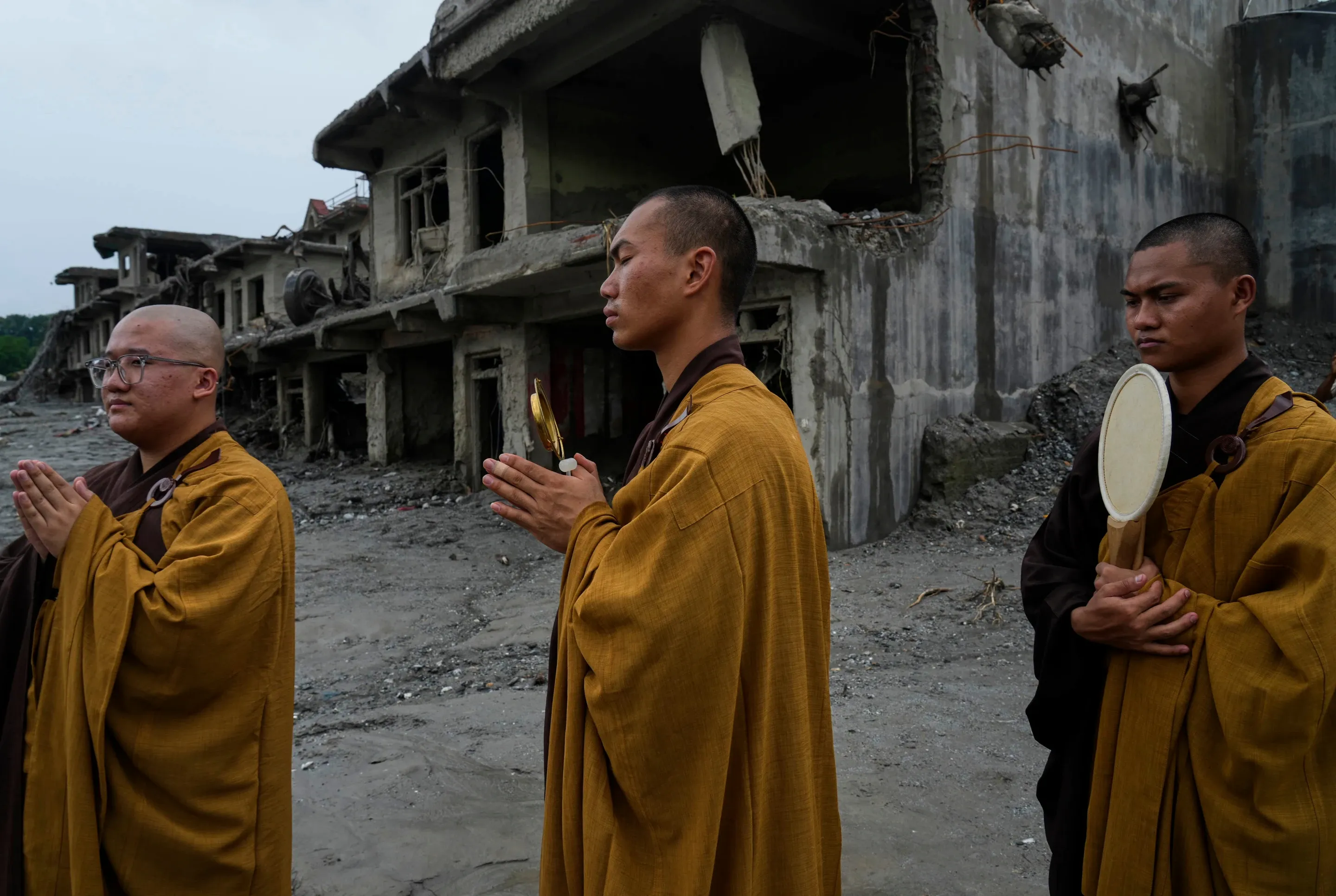
Nepal held a day of mourning on Monday to commemorate those who died in the August 26 floods, during which government offices lowered flags and family members completed their mourning rituals.
Monday marked the 13th day since the flooding resulted in over 1,300 deaths across Nepal and Tibet, with the disaster management agency reporting that approximately 5,000 people remain missing, including foreigners.
In Hindu-majority Nepal, mourning periods span 13 days, during which immediate family members stay home while relatives visit to pay respects. On the final, thirteenth day, rituals are conducted to pray for the deceased souls.
Some individuals whose relatives are still unaccounted for have held symbolic funerals incorporating mourning rites. In Hindu tradition, cremation is a vital final ceremony, and for certain families, performing this rite without the bodies of their loved ones offers spiritual solace.
The government had previously declared Monday an official day of mourning, requiring all offices to lower flags to half-staff.
In Kathmandu, family members assembled near the prime minister's office and key ministries to urge the government to expedite search and rescue operations for hundreds of individuals who were working on hydropower plants and were either swept away by the surging Bhotekhoshi river or buried under debris.
Search efforts are ongoing for the hundreds of people whose whereabouts remain unknown.
Rescuers extracted a Chinese national from a power plant on Saturday, and two Nepalese workers were rescued from the same facility on Friday.
Authorities stated that rescue focus has intensified on 12 hydropower projects, where around 900 workers are missing, and an estimated 500 may be trapped in various tunnels. Specialized rescue teams from India, China, South Korea, and the United States are currently searching through debris, damaged structures, and tunnels at these sites in hopes of locating survivors.