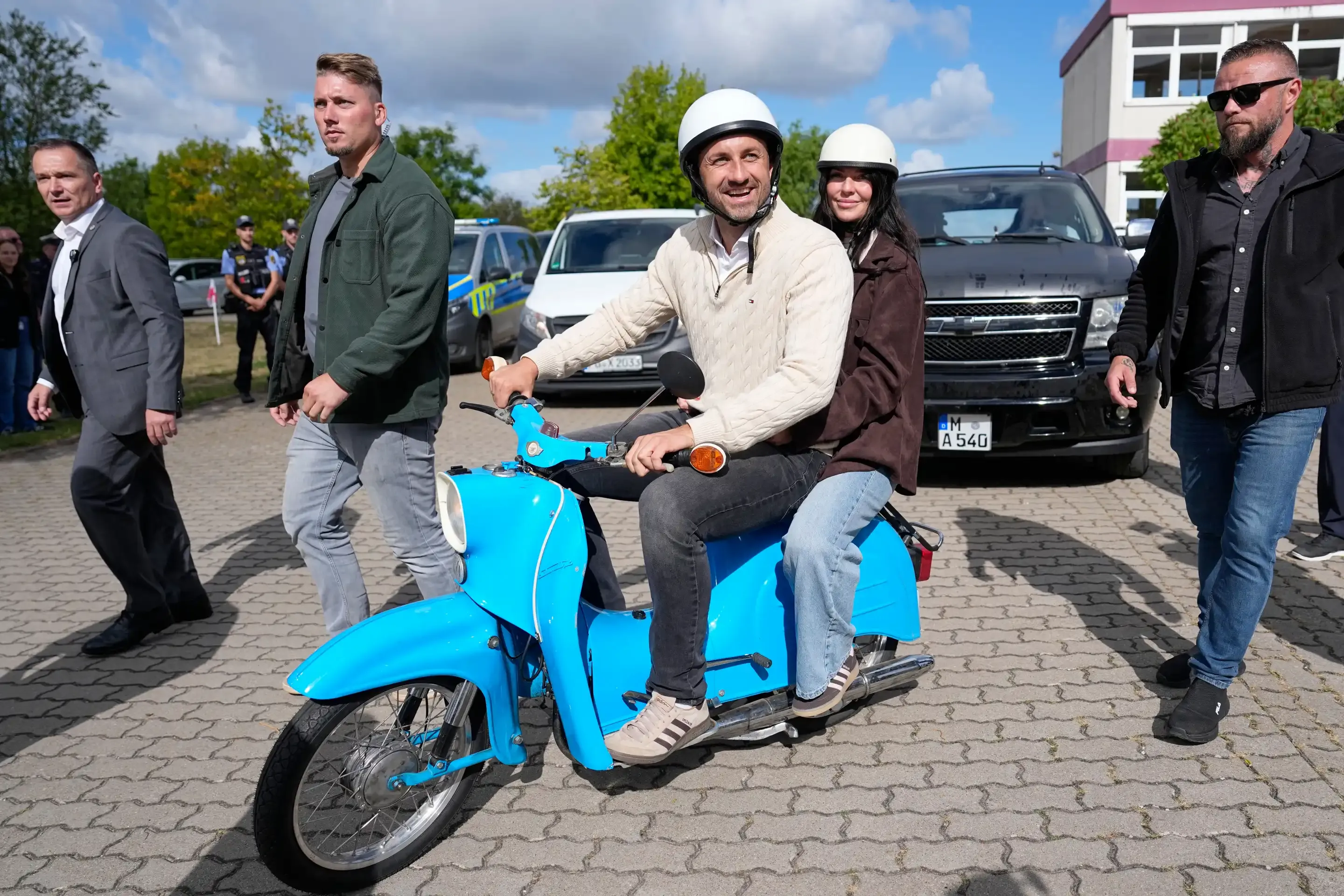
Ulrich Siegmund, a charismatic 35-year-old who presented a relatable image for the far-right Alternative for Germany (AfD) by blending promises of future improvement with nostalgia, guided the party to its most significant performance yet.
The party achieved a strong victory in Sunday’s regional election in Saxony-Anhalt but narrowly missed securing a majority needed to form the first far-right state government since World War II.
Siegmund's image was prominent on AfD posters during a campaign themed "everything is possible." At events, supporters, some wearing his likeness on T-shirts, waited in lines for selfies and brief interactions with the candidate.
Despite the party’s established stances favoring Russia and opposing immigration along with other radical views, Siegmund has refrained from making extreme statements, cultivating an image as a common man. While this appeals to voters who might otherwise be deterred by AfD, he remains firm, asserting after the election that the party will not "throw our positions overboard for coalitions."
Siegmund holds a degree in business management and previously worked selling air fresheners. However, he is not new to politics; after a brief tenure with the center-right Christian Democratic Union under current Chancellor Friedrich Merz when younger, he joined AfD.
He has served as a lawmaker in the Magdeburg state legislature for 10 years and has been the co-leader of AfD's parliamentary group there since 2022. He gained a social media following by criticizing restrictions implemented during the COVID-19 pandemic.
In addition to his image as an energetic young politician, Siegmund frequently referenced the past. During the campaign, he stated that voters desire "the old, safe Germany back."
Born on October 25, 1990, shortly after German reunification, he also appealed to lingering nostalgia for life in communist East Germany among some voters—notably through campaign rides on Simson mopeds manufactured in the east. On Sunday, he arrived at his hometown polling station in Tangermuende on one of these machines.
AfD's use of the mopeds has drawn criticism from the Simson family, whose Jewish ancestors were expropriated by the Nazis in the 1930s and subsequently relocated to the U.S.
The party’s regional branch in Saxony-Anhalt is among several designated as a proven right-wing extremist group by the domestic intelligence agency.
Siegmund attended a 2023 meeting in Potsdam where a prominent member of the extremist Identitarian Movement presented his "remigration" concept for immigrant deportations—an event that sparked large protests when disclosed months later. Siegmund was subsequently removed from leading the state legislature’s social affairs committee, though he denied any wrongdoing, stating his attendance did not imply endorsement.
During a recent television debate, incumbent state governor Sven Schulze questioned whether Siegmund is a right-wing extremist.
"I don’t want to judge that as far as he personally is concerned, and I can’t either," Schulze responded. "But I know who he surrounds himself with." The governor added that there were "very extreme people" in Siegmund’s circle.
AfD strongly denies accusations of extremism. Last month, Siegmund stated that "no one here needs to be afraid, quite the contrary. Every honest person in Saxony-Anhalt will benefit from an AfD-led government."
Wolfgang Merkel, a political science professor at the WBZ Berlin Social Science Center, commented that Siegmund "manages to come over as likable, open, always smiling," adding that he avoids the often abrasive and overtly provocative or ideological language of some other prominent AfD figures.
"He is avoiding major conflicts at present; that doesn’t have to mean that he is a moderate, or conservative. He isn’t," Merkel said before the election. He concluded that "whether he can govern is something he still has to prove."