The United Kingdom on Tuesday prohibited trade involving Israeli settlements in the occupied West Bank, stating that "settler terrorists" are conducting "ethnic cleansing" of Palestinians. This action represents a notable hardening of Britain’s position toward a long-standing ally.
France and Canada announced similar measures in an effort to prevent expanding settlements and escalating violence from precluding the establishment of a future Palestinian state.
Israel reacted strongly, announcing it would close the British consulate in Jerusalem.
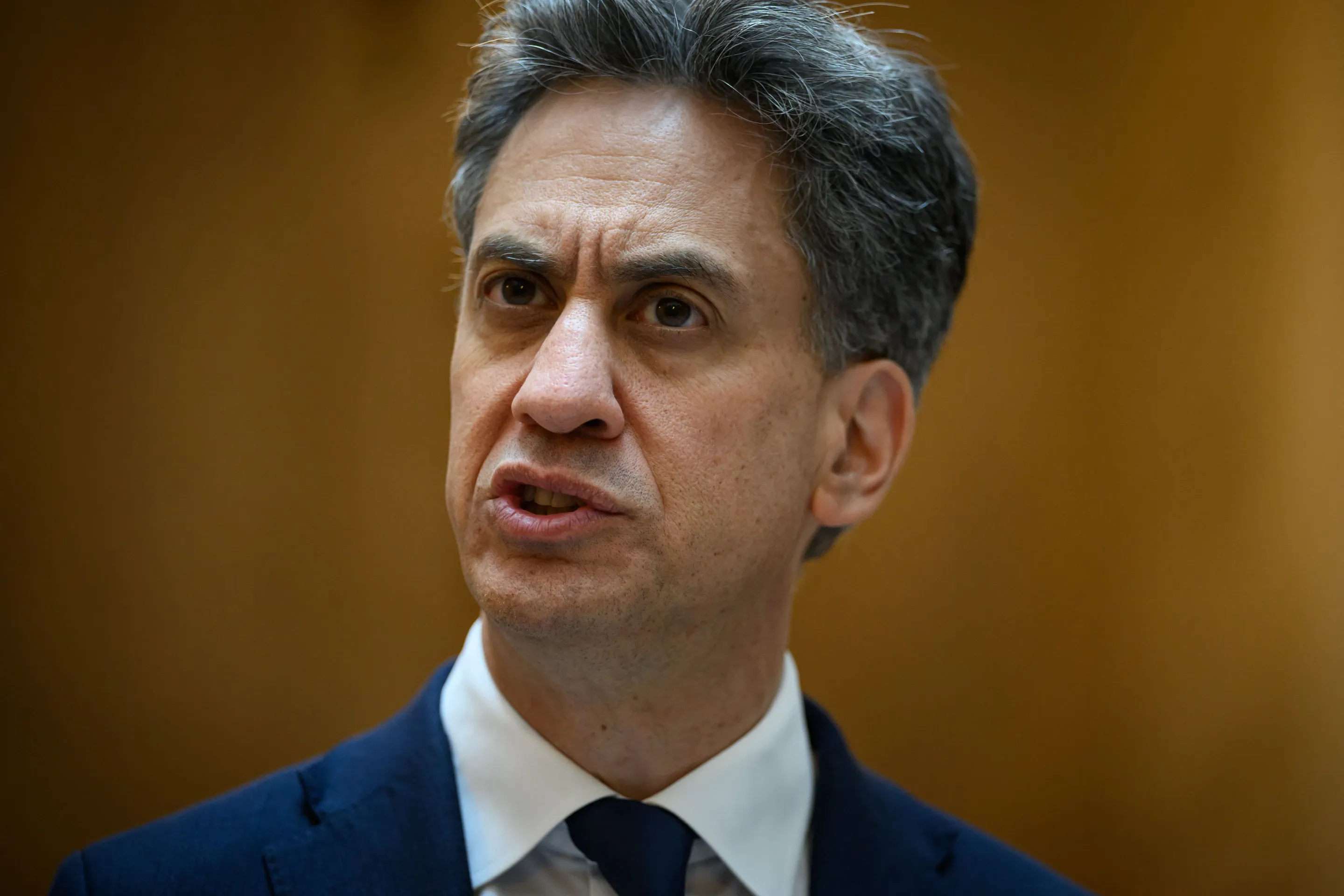
Foreign Secretary Ed Miliband confirmed that the U.K. will ban imports of all goods originating from the settlements and prohibit companies from offering services to them, including financing, construction, infrastructure, real estate, and advertising.
Miliband stated, “I do not believe the British people want us supporting the occupation by accepting products from settlements in our shops and supermarkets.”
In a joint statement, British Prime Minister Andy Burnham, French President Emmanuel Macron, and Canadian Prime Minister Mark Carney asserted that settlement expansion and settler violence in the West Bank "pose a direct and urgent threat" to the two-state solution. They indicated their decision was made "before it is too late."
The expected economic impact may be limited, given that settlements generate only a small volume of largely agricultural exports. However, the move serves as a symbolic expression of disapproval from some of Israel's closest allies and signals growing isolation for the Israeli government following the Gaza war.
Miliband expressed feeling "a deep sense of shame about what has unfolded in Palestine under the eyes of the international community." He added, “We will not acquiesce in the destruction of the two-state solution.”
Israeli Foreign Minister Gideon Sa’ar condemned the move as "despicable." He announced that Israel would expel U.K. representatives from a joint military center monitoring the Gaza ceasefire and cease U.K. training for the Palestinian Authority’s security forces in the West Bank. Furthermore, Israel barred entry to over a dozen British lawmakers and other U.K. citizens whom Sa’ar claimed were "involved in antisemitic and anti-Israel activity."
Settlements have expanded under Netanyahu
Under the ultranationalist government of Israeli Prime Minister Benjamin Netanyahu, construction of settlements in the West Bank—territory seized by Israel during the 1967 Mideast war—has increased significantly. Netanyahu’s government regards the West Bank as the biblical and historical homeland of the Jewish people and opposes a Palestinian state.
The international community largely deems such construction illegal. Britain and other nations have expressed particular concern regarding the E1 settlement project approved by Israel, which would effectively divide the territory in half.
There have been documented increases in settler attacks on Palestinians, evictions from Palestinian towns, Israeli military operations and checkpoints restricting freedom of movement, alongside several Palestinian attacks against Israelis.
Miliband confirmed that “The British government agrees that there is ethnic cleansing of Palestinians in areas of the West Bank, perpetrated by settler terrorists.” He noted instances where "houses bulldozed, roads and public infrastructure destroyed, families displaced from their homes."
Miliband specified that the trade ban will be effective within six to nine months. He mentioned that Denmark, Finland, Iceland, Poland, Portugal, and Sweden have pledged to "support further action."
He also stated that the Netherlands, Ireland, Belgium, Spain, and Norway have either banned goods from settlements or are in the process of doing so.
Miliband also broadened Britain’s embargo on weapons sales to Israel for use in Gaza to include arms "that materially contribute to the occupation" of Palestinian territories.
Move follows UK recognition of a Palestinian state
Britain recognized Palestinian statehood last year as part of efforts to revitalize dwindling attempts at achieving a two-state solution.
In a shift from its previous stance, Miliband announced Tuesday that the U.K. considers Israel’s occupation of the West Bank, not solely the settlements, to be illegal.
This new position is expected to garner support from many Labour voters and lawmakers who have called on the government to take stronger action against Israel and support Palestinians.
However, some voiced concerns that the sanctions might increase support for Netanyahu, who faces a difficult reelection campaign in October, or potentially incite attacks against British Jews. The U.K.'s chief rabbi, Ephraim Mirvis, described it as "a dark day for British Jews."
Opposition Conservative Party foreign affairs spokesman Tom Tugendhat warned that “turning Israel into a pariah will risk sectarian division in our own country and risk a further rise in antisemitic violence on our own streets.”
Announcement sparks anger in Israel
Prior to Miliband’s announcement, Itamar Ben-Gvir, Israel’s hardline public security minister and a settler leader, urged Netanyahu to recognize Argentina's claim to the Falkland Islands, a British overseas territory in the South Atlantic known as the Malvinas by Argentina.
Israeli President Isaac Herzog called the ban "a grave miscalculation, a decision that will fall on the wrong side of history." He stated, “In the current context, it would be a gross interference in the democratic elections of a sovereign nation.”
The move also drew criticism from U.S. ambassador to Israel, Mike Huckabee, a long-time supporter of the settlements, who characterized it as "discrimination against the Jewish people." He warned that the U.K. could face "repercussions or retaliations" from the U.S. if sanctions were imposed.
Several U.S. states have laws prohibiting contracts or investments with businesses boycotting Israeli firms, including those located in the West Bank.
Burnham’s office reported speaking with U.S. President Donald Trump on Monday to outline "the U.K.’s commitment to working toward peace and security in the region" and achieving a two-state solution. No details were provided regarding Trump's response.
Miliband, whose parents arrived in the U.K. as refugees from the Nazis, told lawmakers he spoke “as a proud British Jew” and supporter of Israel. He asserted, “Our argument is not with the people of Israel, with whom the U.K. has unshakable bonds.” He concluded, “Our argument is with the conduct of its government.”