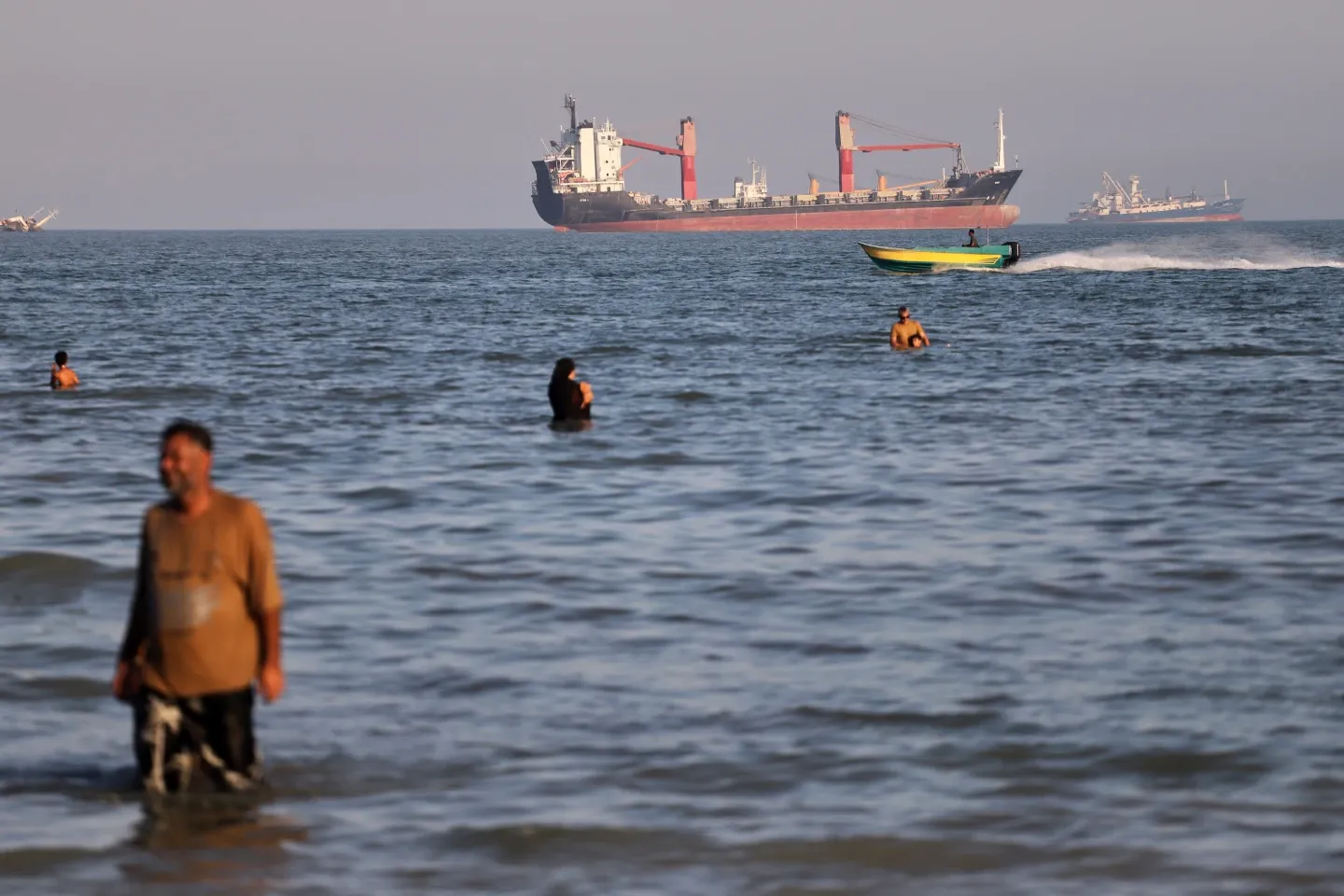
A Liberian oil tanker successfully exited the Strait of Hormuz on Thursday by utilizing a new route close to Oman’s shore, a path promoted by a U.N. maritime agency, even amid threats against shipping from Iran’s paramilitary Revolutionary Guard.
The transit of the Stoic Warrior and the associated threats occur as tensions escalate between Iran and the United States regarding the terms of their interim accord intended to permanently end the Iran war. The two nations are increasingly debating aspects of the deal signed last week, ranging from passage through the narrow mouth of the Persian Gulf to the future status of Iran’s highly enriched uranium stockpile.
The memorandum of understanding signed between the U.S. and Iran established a 60-day window to resolve these and other details. During this period—while private talks continue—leaders from both countries will also engage in public negotiations, which raises the risk of derailing the fragile ceasefire in the region.
A significant complication for the agreement is the resumption of fighting in Lebanon between Israel and the Iranian-backed militia Hezbollah on Wednesday. The country’s state-run news agency reported that Israel conducted an airstrike in southern Lebanon that resulted in two fatalities, marking Israel's first such strike since the latest ceasefire began on Saturday.
Tanker sails through Strait of Hormuz
The Stoic Warrior, having signaled its intent to transit the Strait of Hormuz, departed early Thursday morning for a voyage hugging the coasts of the United Arab Emirates and then Oman.
The vessel subsequently traveled around Oman’s Musandam Peninsula in close proximity to the shore, following part of a route established by Oman in coordination with the International Maritime Organization (IMO), an agency under the United Nations that monitors sea shipping.
North of this designated route lies the Traffic Separation Scheme, which is the central channel through the strait where ships have moved freely for decades and is used for transporting approximately one-fifth of all global oil and natural gas.
However, reports indicated at least one mine had been sighted in the water after the Guard claimed it mined the passage during the war that began on February 28 with U.S. and Israeli strikes against Iran. This threat from mines caused the route to be shut down.
The naval arm of the Revolutionary Guard issued an angry warning on Thursday, as reported by Iran’s state-run IRNA news agency, seemingly in response to the IMO and Oman's proposed route.
The Guard stated: “A few hours ago, without notice or coordination with the Islamic Republic of Iran, some authorities announced a new route for ship traffic in the Strait of Hormuz, which is unacceptable and completely dangerous.”
The Iranian force further notified all parties that “the only authorized route for passing through the Strait of Hormuz is the one declared by the Islamic Republic of Iran. Vessel traffic outside these routes is extremely dangerous and prohibited.” It concluded by adding: “Violators will be dealt with,” without providing further detail.
No immediate incidents were reported in the strait as the Stoic Warrior passed, according to ship-tracking data, which showed several ships trailing behind it.
Anwar Gargash, a senior Emirati diplomat, warned Iran on Thursday against attempting to obstruct the strait or impose fees on vessels navigating its waters.
Gargash wrote on X: “New geopolitical facts cannot be imposed on the Arab Gulf states as a result of a treacherous aggression against them. It sows new seeds of discord and conflict for the future. And this is precisely what applies to the Strait of Hormuz.”