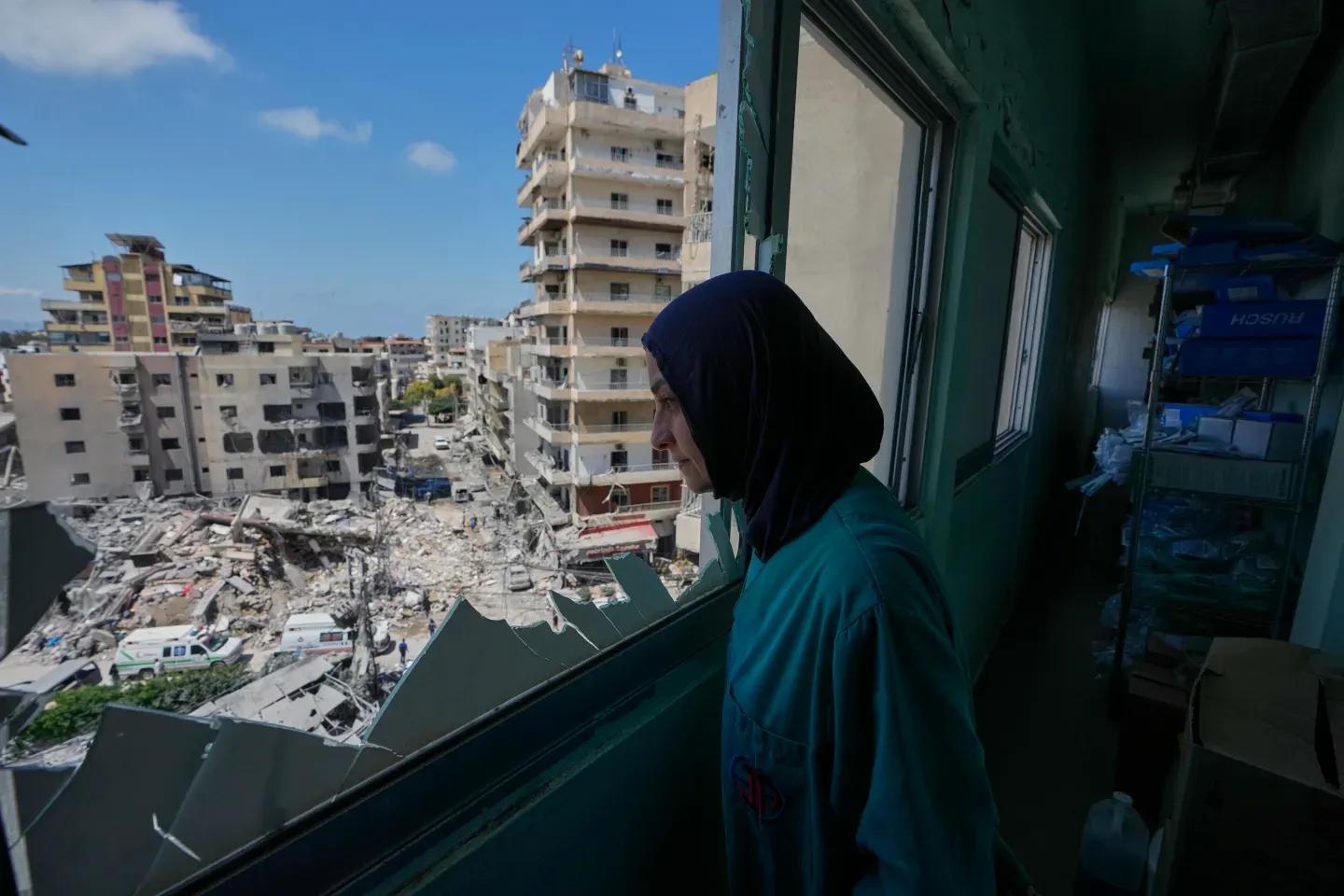
Israeli drone strikes on southern Lebanon on Tuesday killed eight people, including a father and his two children, a day after U.S. President Donald Trump said Israel and the Iranian-backed Hezbollah agreed to dial back fighting. Hezbollah continued launching dozens of projectiles and drones toward Israeli soldiers in southern Lebanon and civilians in Israel.
Israel threatened on Monday to strike Beirut’s southern suburbs, causing panic in the Lebanese capital as thousands fled. Israeli forces are making their deepest incursion into Lebanon in 26 years, but Beirut has been mostly spared.
Trump later announced after a call with Israeli Prime Minister Benjamin Netanyahu and communicating with the Lebanese militant group through mediators that “there will be no Troops going to Beirut.” But there was little change, with Israel and Hezbollah continuing the intensity of attacks.
Israeli Defense Minister Israel Katz said during a defense conference on Tuesday that Israel previously refrained from attacking Beirut out of deference for negotiations between the U.S. and Iran, which wants a ceasefire deal in the Iran war to end fighting in Lebanon, too.
But Prime Minister Benjamin Netanyahu informed Trump in a phone call late Monday that Israel will attack Beirut’s southern suburbs if Hezbollah continues targeting northern Israel, Katz said.
More talks are set for Tuesday in Washington
A second round of talks between Israel and Lebanon is scheduled for Tuesday and Wednesday in Washington, where Lebanese negotiators are set to seek a full ceasefire that will prevent future attacks. The talks that began in April were the first in more than three decades between the countries, which have no formal diplomatic relations. Hezbollah has rejected direct talks, counting on pressure from Iran.
The fighting in Lebanon presents a major obstacle to the emerging deal to extend the ceasefire in the Iran war. Despite a Washington-brokered ceasefire reached in April, Israel and Hezbollah have continued to exchange strikes after Israel targeted areas in Lebanon, saying it was for self-defense.
Lebanon’s state-run National News Agency reported Tuesday that an Israeli drone strike hit a car on the road linking the southern town of Marjayoun with the city of Nabatiyeh, killing James Karam, a dentist from the nearby Christian town of Qlayaa, along with his daughter and son.
The Lebanese army said two soldiers were lightly wounded when a separate drone targeted them on a road outside the city.
A drone strike on the village of Jibchit killed two Syrians who worked at a plant nursery, the agency reported, while another on the nearby village of Toul killed two people. A third strike hit a car near the village of Harouf, killing one person. The Israeli military said it wasn’t aware of any Israeli strikes in that area.
NNA also reported that an Israeli airstrike on Monday killed six in the southern village of Marwaniyeh.
Hezbollah said Tuesday its fighters fired anti-tank missiles on Israeli troops who were pushing into the southern village of Hadatha, about 7 kilometers (4 miles) from the Israeli border. Sirens sounded in several areas in northern Israel, the military said in a statement, adding that “a suspicious aerial target” was identified in the area in which Israeli soldiers are operating in southern Lebanon, but that no injuries were reported.
Close to 3,500 people have been killed in Lebanon
The latest round of fighting between Israel and Hezbollah has killed 3,433 people in Lebanon and displaced more than 1 million people. According to Netanyahu’s office, at least 27 Israeli soldiers and a defense contractor have been killed in or near southern Lebanon. Two civilians have also been killed in northern Israel.
Israel’s military said late Monday that a soldier was killed in southern Lebanon. It added that seven more soldiers were wounded in the incident, three of them severely.
Hezbollah’s use of hard-to-detect fiber-optic drones has been deadly for the Israeli military, which is struggling to respond.