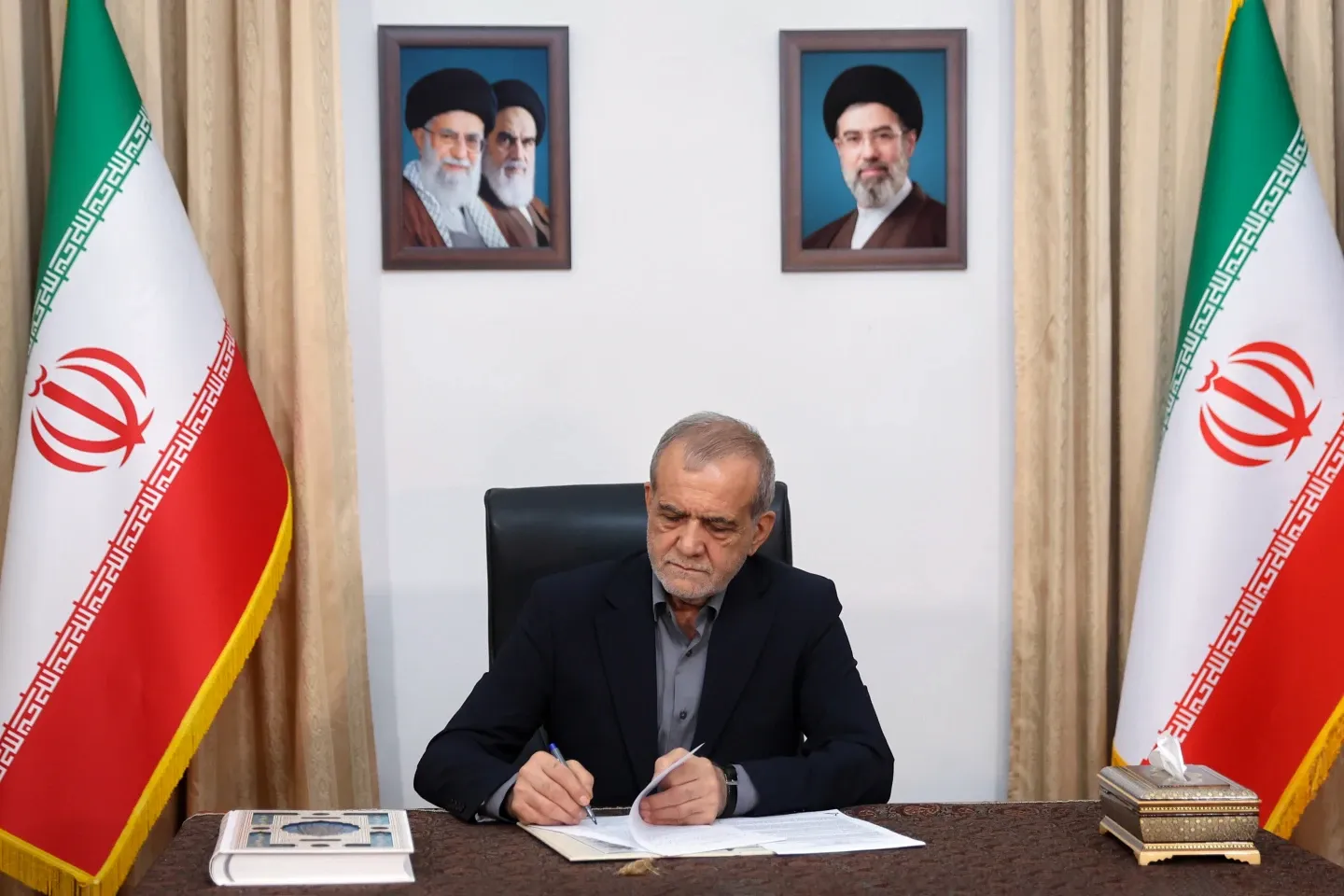
As Iranian media boast of the “magnificent defeat” of the United States, Tehran is pressing its advantage, racing to sell oil under the interim peace agreement signed this week and trying to halt Israeli attacks in Lebanon.
But the Islamic Republic suffered its own major blows and faces challenges ahead. Its economy is in shambles after the war, the country was rocked by mass protests in January, and its supreme leader has yet to appear in public. It is entering nuclear talks with the U.S. after coming under attack during two previous rounds.
The deal offers desperately needed sanctions relief, much of which will come only if Iran rolls back its nuclear program, including at a minimum diluting its stockpile of highly enriched uranium. That concession has angered Iranian hard-liners. The U.S. is meanwhile demanding it cease enrichment entirely, something Iran has staunchly refused for decades.
Iran’s leaders are projecting confidence, having clung to power despite weeks of heavy U.S. and Israeli strikes. They also believe U.S. President Donald Trump is unlikely to carry out threats to resume the war because of Iran’s demonstrated ability to close the Strait of Hormuz and damage the world economy.
“It’s too much to say that Iran has emerged a victor, but it could have been much worse,” said Farzan Sabet, an Iran expert at the Geneva Graduate Institute think tank. “I think that the real victory for Iran was … survival.”
The deal offers financial benefits
Under the interim deal, the U.S. is to issue waivers to allow for the export of Iranian crude oil. At least three state-owned Iranian oil tankers have already set sail as the U.S. has lifted its blockade, according to Lloyd’s List Intelligence.
Iran has exported nearly 18 million barrels in the last five days, the firm TankerTrackers.com said Friday, putting the value at $1.44 billion.
Dozens more tankers loaded with oil could soon depart from Kharg Island, Iran’s main export terminal on the Persian Gulf, further pushing down world prices.
Benchmark Brent crude, which traded over $110 a barrel last month, has fallen to around $80 since the deal was reached. The average price of a gallon of gasoline in the U.S. also has dropped to under $4, a closely watched metric ahead of midterm congressional elections.
The sanctions had long forced Iran to export crude through a “shadow fleet,” selling mainly to China at below-market rates. Now it can pursue more customers and get a better price.
Iran will need that cash more than ever as it grapples with the fallout from the war.
Iran is facing a looming economic crisis
Since authorities lifted a monthslong internet shutdown, many Iranians have posted photographs of their empty refrigerators.
Meat and other staples have grown too expensive for some households. The Iranian rial, which traded at 32,000 to $1 at the time of the 2015 nuclear deal with world powers, now stands at over 1.5 million to the dollar.
“The conflict is estimated to have cost at least one million Iranian jobs, with 20% of workforce losses tied to the state-imposed internet shutdown,” said Holly Dagres, a senior fellow at the Washington Institute for Near East Policy.
“Ordinary Iranians, already struggling under systemic mismanagement and corruption as well as U.S. sanctions, have felt those burdens compounded by hyperinflation that has rendered the Iranian rial effectively worthless.”
The rial’s collapse sparked the nationwide protests that swept across Iran in January, challenging the rule of then-Supreme Leader Ayatollah Ali Khamenei. Iran’s security forces launched their bloodiest-ever suppression, killing thousands of people.
The 86-year-old Khamenei and other top leaders were killed in Israel’s opening barrage of the war on Feb. 28. Funeral ceremonies are planned for July 4-9, coinciding with the six-month anniversary of the protest crackdown. The government has sponsored nonstop rallies since the war began, in a show of force.
Moderate voices in Iran are pushing for the country to seize the potential economic benefits from negotiations. Along with a complete lifting of all sanctions, the accord promises a $300 billion investment fund for Iran if it reaches a final deal with the U.S. — though it remains unclear where that money would come from.
The question is how far Iran’s new Supreme Leader Ayatollah Mojtaba Khamenei, the late leader’s son, along with establishment hard-liners, are willing to go. In a statement on state media, he endorsed the interim deal, saying talks “will not mean accepting the enemy’s opinion” but also saying he had a “different viewpoint,” without elaborating.
The deal could unravel over Lebanon and nuclear issues
The conflict in Lebanon has already put the deal at risk. Talks planned for Friday in Switzerland were postponed as fighting intensified between Israel and Iran-backed Hezbollah militants.
Israel says it will continue to occupy large areas of southern Lebanon and fight Hezbollah until it no longer poses a threat. Hezbollah has refused to halt its attacks without an Israeli withdrawal, though the two sides agreed to halt hostilities Friday.
The interim deal between Iran and the U.S. — which neither Israel nor Hezbollah has signed — calls for both sides to cease military operations and for Lebanon’s territorial integrity and sovereignty to be upheld.
“The end of the war in Lebanon is an inseparable part of (the) complete end of the war,” Iranian Foreign Minister Abbas Araghchi said Tuesday. “And the end of the war also includes the end of the occupation.”
That leaves very little wiggle room for the Americans, who postponed Vice President JD Vance’s trip to Switzerland.
Then there’s the actual negotiations. Iran appears to have gotten two main issues long pushed by the U.S. and Israel off the table: its missile program and its support for Hezbollah and other militant groups.
On the central nuclear issue, it agreed to “downblend” its highly enriched uranium, which resolves one top U.S. concern.
But Raja News, a media outlet aligned with ultra hard-line factions, criticized that agreement, saying Iran had “given up its most important levers.” That shows the pressure not to back down on other issues, like the broader enrichment program.
“I’m not very optimistic about the kind of second round of discussions that are going to focus on the nuclear issue,” Sabet said. “It’s not actually clear to me yet that those will go anywhere, at least this year.”
EDITOR’S NOTE — Jon Gambrell, news director for the Gulf and Iran for The Associated Press, has reported from each of the Gulf Cooperation Council countries, Iran and other locations across the Mideast and the wider world since joining AP in 2006.